
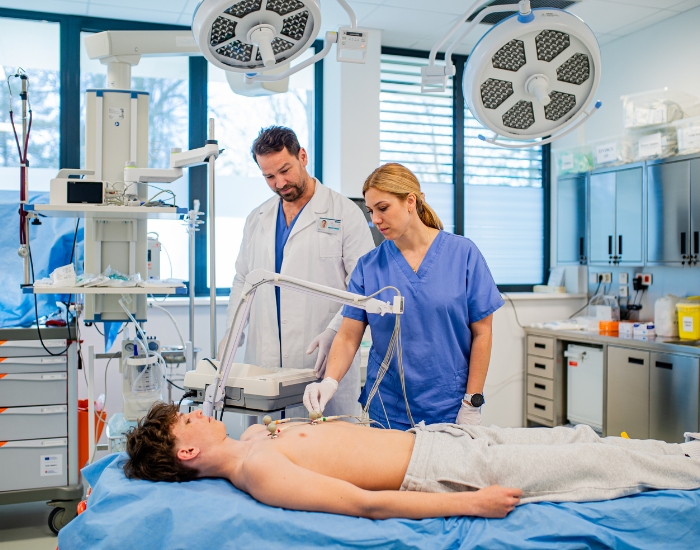
Heart health is a critical part of overall well-being, and early detection of heart conditions can save lives. Understanding the differences between echocardiography vs EKG is essential, as these common diagnostic tools provide valuable insights into heart function but work in different ways, measure different aspects of the heart, and are used in varying situations.
This guide is designed to help patients understand the differences between echocardiography and EKG, their purposes, benefits, and limitations, so you can better understand your cardiovascular care.
1. What is an EKG?
An electrocardiogram, commonly called an EKG, is a simple, non-invasive test that measures the electrical activity of the heart. By placing small electrodes on the chest, arms, and legs, an EKG records the timing and strength of electrical signals as the heart beats.
This test is particularly effective in detecting abnormal heart rhythms, known as arrhythmias, and identifying previous or ongoing heart attacks. EKGs are quick, painless, and typically take just a few minutes to complete. They do not involve radiation or invasive procedures, making them safe for most patients, including those with underlying health conditions.
2. What is Echocardiography?
Echocardiography, or an “echo,” uses sound waves to create images of the heart. Unlike an EKG, which shows the heart’s electrical activity, an echo lets doctors see the heart chambers, valves, walls, and blood flow in real time.
There are different types of echocardiograms. A transthoracic echocardiogram (TTE) is the most common and is done by placing a small device on the chest. A transesophageal echocardiogram (TEE) uses a probe passed down the esophagus to get clearer images, usually for more complex cases. A stress echocardiogram checks how the heart works during exercise or with medication that stresses the heart.
Echocardiography is especially useful for finding problems like heart valve issues, heart failure, cardiomyopathy, and congenital heart defects.
3. Key Differences: Echocardiography VS EKG
Both tests provide important information about the heart, but they work in different ways. An EKG records the heart’s electrical activity and timing, while an echocardiogram displays the heart’s structure and how well it functions.
Doctors use an EKG mainly to detect arrhythmias, heart attacks, and issues with the heart’s electrical signals. They use echocardiography to examine the heart’s anatomy, check valve function, and assess blood flow.
The procedures also differ. An EKG works quickly, is non-invasive, and usually takes just a few minutes. Echocardiography takes longer and, in cases like TEE, may require special positioning or mild sedation.
Echocardiograms give detailed visual information about the heart, while EKGs show a snapshot of electrical activity. Understanding these differences helps patients see why a doctor may order one test or both depending on their symptoms.
4. When Each Test is Recommended
Doctors often start with an EKG when a patient experiences chest pain, palpitations, dizziness, or shortness of breath. They also use it for routine heart checks, especially for people with risk factors like high blood pressure, diabetes, or a family history of heart disease. They recommend echocardiography when they suspect structural heart problems, such as valve disease, heart failure, or congenital defects. Doctors may also use it after a heart attack or to monitor ongoing heart conditions.
Sometimes, they order both tests together. For example, an EKG can detect an arrhythmia, while an echocardiogram shows whether that rhythm problem affects heart function. Using both tests gives doctors a complete picture of a patient’s heart health.
5. Benefits and Limitations
EKG Benefits:
- Quick, simple, and painless
- Detects arrhythmias and previous heart attacks
- Can be performed in-office or even with portable devices
EKG Limitations:
- Does not provide information about heart structure or valve function
- May not detect heart issues that occur intermittently
Echocardiography Benefits:
- Provides detailed images of heart anatomy and blood flow
- Helps diagnose structural and functional problems
- Non-invasive (except for TEE) and generally safe
Echocardiography Limitations:
- Takes longer than an EKG
- Requires trained technicians and specialized equipment
- May not detect electrical conduction problems directly
6. Preparing for the Tests
- EKG: No special preparation is needed. Patients should avoid applying lotions or oils to the chest, as electrodes may not adhere properly.
- Echocardiography: Typically, no special preparation is needed for TTE. For TEE, fasting may be required, and sedation is sometimes used. Patients should follow their cardiologist’s instructions for accurate results.
7. Final Thoughts
Both echocardiography and EKG are essential tools in modern cardiology. While an EKG provides critical information about the heart’s electrical activity, echocardiography offers a detailed look at the heart’s structure and function. Together, these tests help cardiologists diagnose conditions accurately, monitor disease progression, and plan effective treatments.
If you experience chest discomfort, palpitations, shortness of breath, or other cardiovascular symptoms, consulting a specialist and undergoing these tests when recommended can ensure timely care. For expert evaluation and advanced cardiovascular diagnostics, visit Cypress Cardiovascular Institute, serving patients across Cypress and Greater Houston with comprehensive heart, vein, and vascular care.
Disclaimer: This blog is for educational purposes only. It does not provide medical advice or replace consultation with a licensed healthcare provider. Always speak with a qualified medical professional for diagnosis or treatment of heart conditions.