 Same-Day Appointments Available
 Most Major Insurance Accepted
 Medicare & Medicaid Accepted
Same-Day Appointments Available
Most Major Insurance Accepted
Medicare & Medicaid Accepted
Medicare & Medicaid Accepted
Same-Day Appointments Available
Most Major Insurance Accepted
Medicare & Medicaid Accepted
Home › Vein Care
Vein Care · Cypress, TX
Cypress Cardiovascular Institute treats varicose veins, spider veins and chronic venous insufficiency (CVI) in Cypress, TX. Our vein specialist Dr. Jad Daye, MD, RPVI, and our team use leg vein ultrasound to find the cause, then offer minimally invasive treatments such as VenaSeal™, ClosureFast™ radiofrequency ablation (RFA) and vein ablation. Most patients return to normal activities within 1–2 days.
✓ Board-certified cardiologists
✓ Same-day appointments available
✓ Medicare, Medicaid & most insurance
Last updated: September 25, 2026 · Cypress Cardiovascular Institute
Understanding Vein Disease
Chronic venous insufficiency (CVI) occurs when damaged or weakened valves in the leg veins allow blood to pool in the legs instead of flowing back toward the heart. The added pressure stretches the veins and can cause varicose veins, swelling, aching and skin changes.
CVI is common and often overlooked, and without treatment it can progress to skin discoloration and venous ulcers. At our clinic, we specialize in diagnosing and treating CVI to help you stay on your feet, regain your mobility and live a healthier life.
Symptoms
Vein disease usually affects the legs and often feels worse after long periods of standing or sitting. Symptoms can be cosmetic, uncomfortable or a sign of more advanced chronic venous insufficiency.
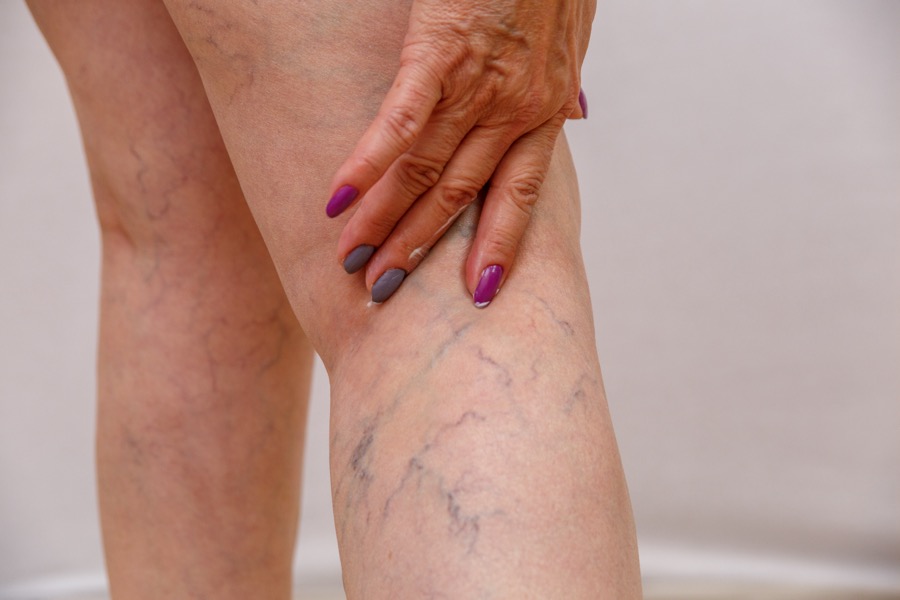
Enlarged, rope-like veins on the legs or feet are varicose veins.
Small red, blue or purple veins close to the surface of the skin.
Legs that ache, throb or feel heavy, especially at the end of the day.
Swelling that improves when you raise your legs is common with venous insufficiency.
Night cramps, itching over the veins or restless sensations in the legs.
Darkened, thickened skin near the ankles or slow-healing wounds (venous ulcers) signal advanced vein disease.
Seek emergency care if one leg suddenly becomes swollen, painful, warm or red, or if you have sudden shortness of breath or chest pain. These can be signs of a blood clot (deep vein thrombosis or pulmonary embolism).
Causes & Risk Factors
Weak vein valves often run in families, and vein disease becomes more common with age. Women are affected more often than men, partly because of hormonal changes and pregnancy. Jobs that involve long hours of standing or sitting also increase pressure in the leg veins.
Comprehensive Vein Evaluation
Every vein care plan starts with a comprehensive vein evaluation. Our state-of-the-art leg vein screening ultrasound helps us accurately diagnose your condition and choose the right treatment.
We ask about leg pain, swelling, cramping, prior blood clots, family history and treatments you have already tried.
A physical exam of the legs looks for varicose and spider veins, swelling, skin changes and wounds.
A painless ultrasound maps the leg veins and shows how blood flows through them.
Ultrasound measures whether blood flows backward through faulty vein valves, which helps determine whether treatment is medically necessary.
The same ultrasound can check the deep veins for blood clots (DVT) before treatment.
Your specialist recommends the best option based on the size and location of the veins and your overall health.
Related reading: When to see a vein doctor for varicose veins.
Advanced Vein Treatment Options
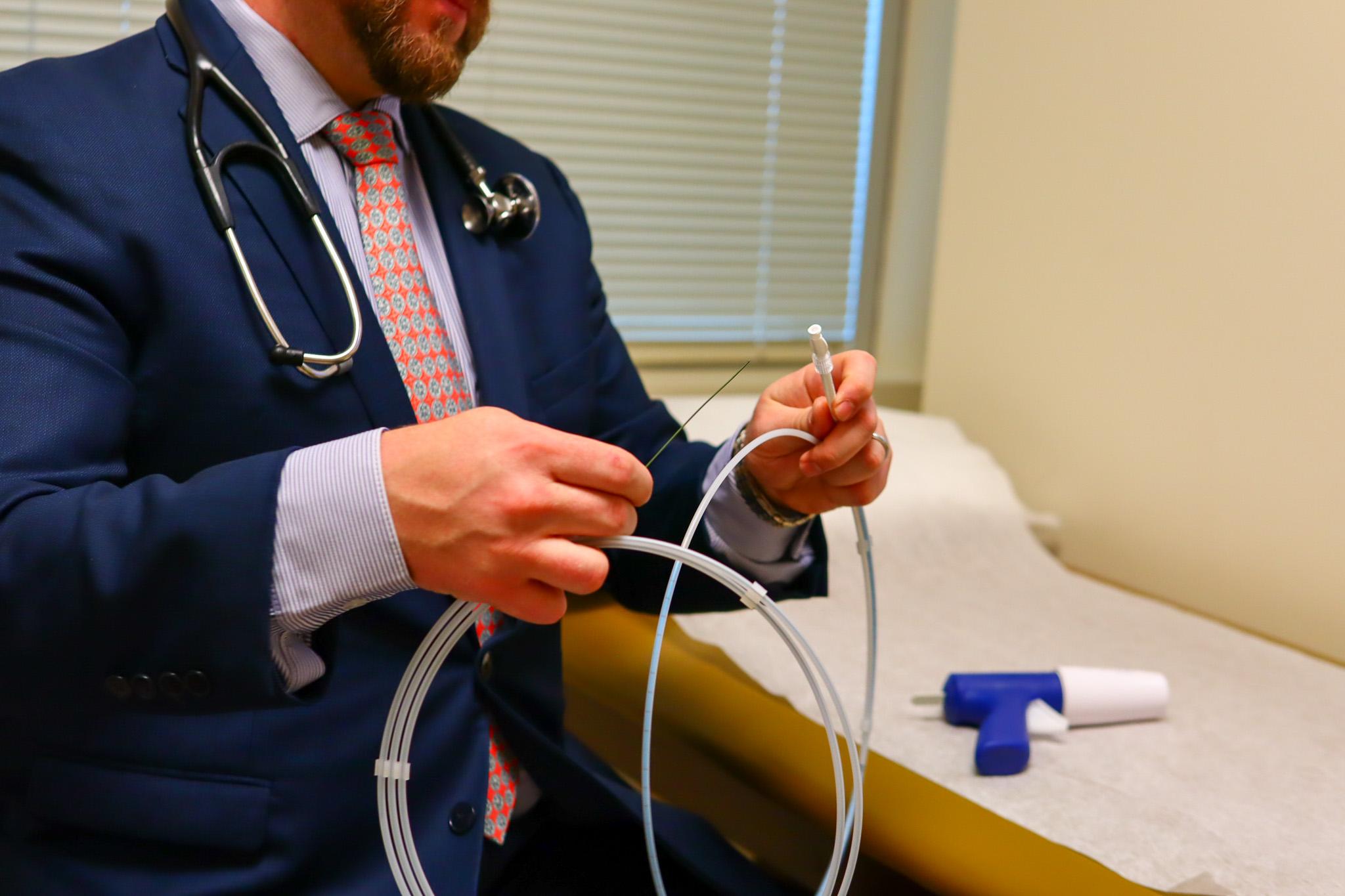
Modern vein treatments are minimally invasive and performed with local anesthesia. They close the diseased vein from the inside so that blood reroutes to healthy veins. Our specialists recommend the best option based on your individual needs.
Most procedures take about 30–60 minutes, depending on the number and size of veins treated. Strenuous exercise should usually be avoided for about two weeks after ablation.
What to Expect
01
Call (281) 955-9158 or request an appointment online. Same-day appointments are often available.
02
Your specialist reviews your symptoms, history and goals and examines your legs.
03
A leg vein ultrasound identifies faulty valves and the veins that need treatment.
04
Minimally invasive treatment, often with a return to normal activities within 1–2 days, followed by a follow-up visit.
Your Care Team
Vein care at Cypress Cardiovascular Institute is led by Dr. Jad Daye, MD, RPVI, a board-certified interventional cardiologist whose RPVI (Registered Physician in Vascular Interpretation) credential covers vascular ultrasound interpretation, together with our cardiology team.
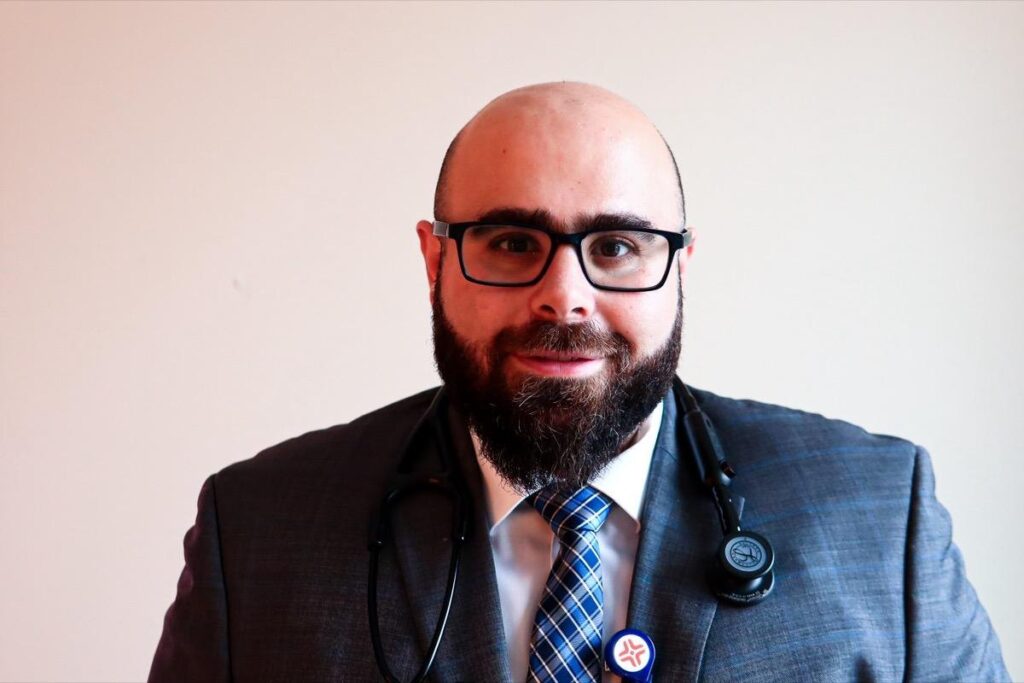
President, Interventional Cardiologist
Board-certified interventional cardiologist with expertise in coronary, structural and peripheral interventions. President of Cypress Cardiovascular Institute and Associate Professor at the University of Houston School of Medicine.
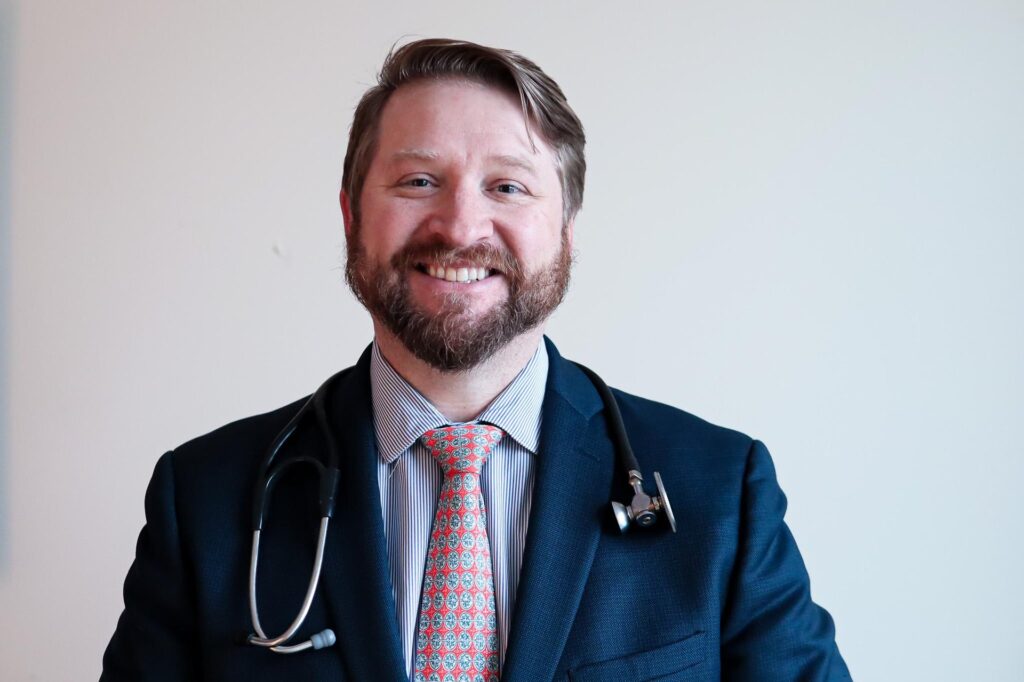
Interventional Cardiologist
Board-certified in internal medicine, cardiovascular disease and interventional cardiology, caring for patients in Cypress and surrounding areas.
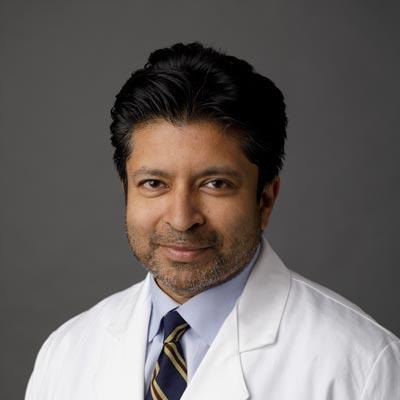
Interventional Cardiologist
Board-certified cardiologist with expertise in cardiovascular conditions including hypertension and chest pain, with a patient-centered approach to treatment.

Interventional & Structural Cardiologist
Specializes in coronary and structural heart disease, including PCI, TAVR and PFO closure. Trained at Baylor College of Medicine.
Locations, Hours & Insurance
Cypress Cardiovascular Institute sees patients Monday through Friday, 8:00 AM to 5:00 PM, at two offices and an imaging center serving Cypress, northwest Houston, Tomball, Spring, Katy and nearby communities such as Bridgeland, Towne Lake and Fairfield.
24518 Northwest Fwy, Suite 325
Cypress, TX 77429
(281) 955-9158
Get directions
10425 Huffmeister Rd, Suite 330
Houston, TX 77065
(281) 955-8818
Get directions
24518 Northwest Fwy, Suite 345
Cypress, TX 77429
(281) 955-9158
Get directions
Insurance: Cypress Cardiovascular Institute accepts Medicare, Medicaid and most major insurance plans. Many plans cover vein treatment when it is medically necessary, and some require a trial of compression stockings first. Insurance information
Frequently Asked Questions
These are minimally invasive treatments for varicose veins and chronic venous insufficiency. Vein ablation is a general term for procedures that close off problematic veins. VenaSeal seals the vein with a medical adhesive, and radiofrequency ablation (RFA), including ClosureFast, uses heat from radio waves to close the vein.
Most treatments take about 30–60 minutes, depending on the number and size of veins being treated.
These procedures are generally well tolerated. You may feel some discomfort, but local anesthesia is used to minimize pain during treatment.
Recovery is typically quick. Most patients return to normal activities within 1–2 days, although strenuous exercise should be avoided for about two weeks.
It depends on the procedure. VenaSeal typically does not require compression stockings, while they may be recommended for a short period after RFA.
The treated veins are permanently closed. However, new varicose veins can develop over time, and a healthy lifestyle can help prevent new ones from forming.
The best way to find out is a consultation with our vein specialist. A leg vein ultrasound shows whether faulty valves are causing your symptoms and which treatment fits best.
Many insurance plans cover vein treatment when it is medically necessary. Cosmetic spider vein treatment is often not covered. Check with your insurance provider or call our office at (281) 955-9158 for coverage details.
This page is for general education and is not a substitute for personal medical advice. Content provided by Cypress Cardiovascular Institute, Cypress, TX.
Same-Day Appointments Available
Take action today and schedule a comprehensive vein evaluation. Call (281) 955-9158 or request an appointment online.
Now Accepting New Patients
Same-day appointments available. Fill out the short form and our team will contact you to confirm your visit.
Drive Now
Tap “Get Directions” to open turn-by-turn navigation in Google Maps.

24518 Northwest Fwy, Ste 325
Cypress, TX 77429
10425 Huffmeister Rd, Ste 330
Houston, TX 77065
24518 Northwest Fwy, Ste 345
Cypress, TX 77429